
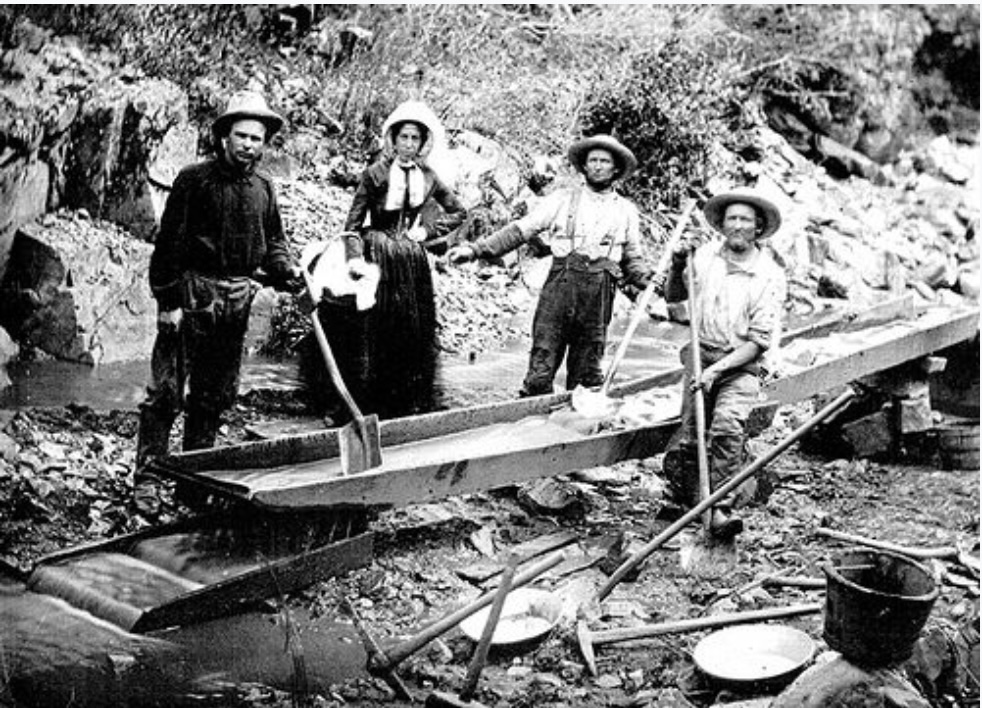
The California Gold Rush began in January 1848 with the first announcement in Australia on December 23, 1848 in the Sydney Morning Herald. The news of the discovery soon spread around the world and by the end of January 1849, seven vessels — six from Sydney and one from Hobart — had sailed from Australia for San Francisco with 93 passengers, including six women and four children. The sailing from Australia to San Francisco depended on the wind and needs for replenishment of food and water. Ports usually included New Zealand, Tahiti, and/or the Sandwich Islands (Hawaii).
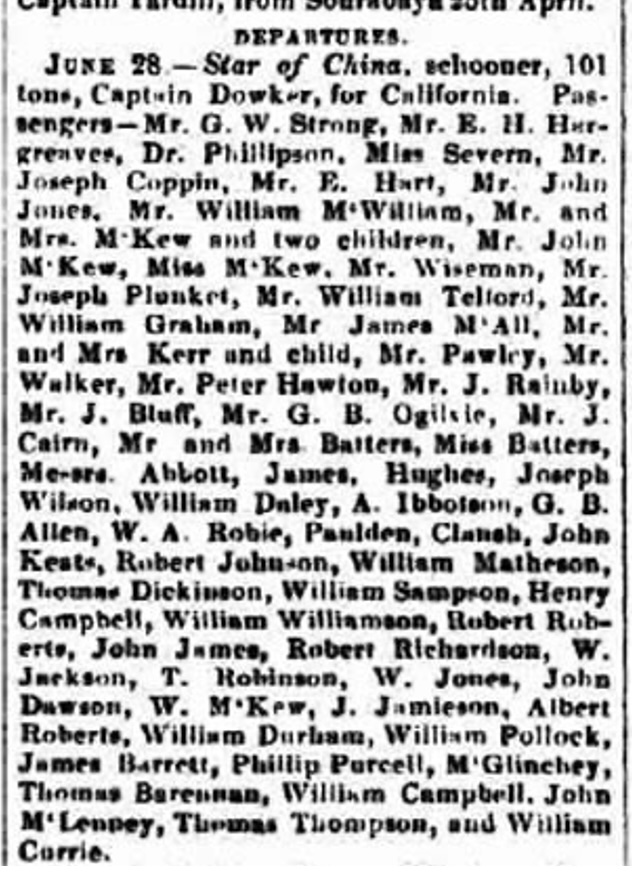
Struck by gold fever, James Barrett and Phillip Purcell set out to make their fortunes. James left his wife Susan and two daughters, aged 5 and 3. Philip Purcell left behind a pregnant wife and 18 month old son. The two men travelled to Sydney where they boarded the thirteenth ship from Australia, the Star of China, a 101 ton brig built at the Manning River in 1843 by a Sydney shipwright, which sailed for California on 28 June 1849. Steerage passengers paid £10 for the fare to California, first class cabins costing £30. James and Phillip must have scraped together the ₤60 because their names are listed in the Sydney Morning Herald shipping departures. Steerage passengers were not generally listed in the newspapers.
Screenshot
Packed with no fewer than 65 passengers, also travelling on the Star of China was EH Hargreaves, possible Edward Hammond Hargreaves, discoverer of gold at Bathurst. It is known that he went to California with the ‘forty-niners’. Hargreaves returned to Australia on Emma on 7 January 1851. On 12 February 1851 at Guyong, Edward Hargreaves found gold at the junction of Summer Hill and Lewis Ponds Creek using panning methods he learned on goldfields of California.
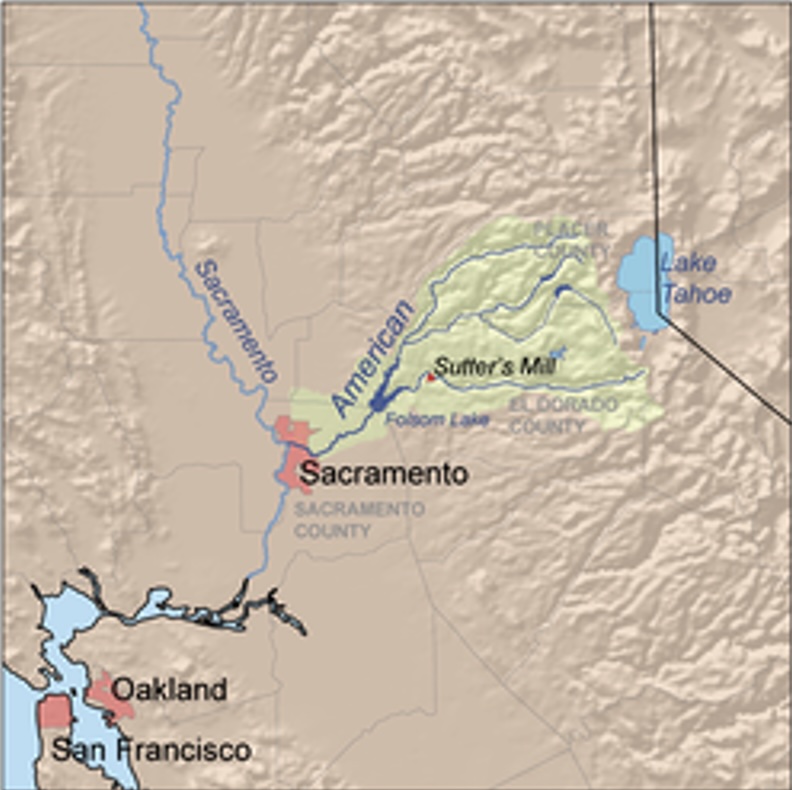
The forty-niners faced hardship and disappointment after the long journey to California. After landing in San Francisco, letters read in Australia tell of a journey of sixty miles up the Sacramento River and a land journey of seventy miles to reach the diggings. Economic recession was severe and food in San Francisco for the miners was exhorbitant, ten times that in Sydney and of very poor quality. There were no vegetables at all. Cost to rent a room was £20 per month. It is suggested that about one-fifth of all Australian goldminers died in poverty. At first work was plentiful and wages were high but as more and more seekers arrived, unemployment rose and wages fell. Some goldseekers returned to Australia immediately in disgust. News of gold finds in NSW and Victoria in early 1851 caused a reversal of the tide of emigration and by December 1851 the exodus ceased.
The 1850 US Federal Census lists a James Barrett in Township 2, Tuolumne, California; one of seven miners at dwelling no. 8320. This James Barrett is listed as “born in New York” but it is very possible that the census taker had never heard of New South Wales, so wrote New York. James was listed as 26 years old.
Screenshot
There is one more goldfields census entry for a James Barrett on 27 September in 1850 US census, and that is for a 32 year old James born in Pennsylvania. This census place was Ringold and Vicinity, El Dorado, California. This camp had many families and the men were not all miners. Some were listed as traders, teamsters, cooks and some (including James Barrett) had no trade at all.
The US census taken 24 January 1851 lists our Phillip Purcell, age 33, as a gold miner at Middle Fork of The American River, El Dorado, California. Of the 146 men in this camp, Phillip was the only man born in Australia. The average value of his daily mining product was $20.00, significantly more than most whose takings were $3.00 per day.
The Sydney Morning Herald tells of a gradual return of many goldseekers in 1851. The Frances which arrived in Sydney on 6 December 1851 carried 37 steerage passengers and the Queen of Sheeba which arrived on 1st January 1852 carried 116 steerage passengers. James Barrett had returned to Liverpool by 1852 and he must have reported to Bridget that he did not know what had become of her husband and so Bridget set out to find him. There is a margin note on her James Mathieson original shipping record stating: “to California per James Byrne 15 July 1853”. [I believe this ship to be Jessie Byrne, a barque of 600 tons which was built in 1852 and had the distinction of being the first ship to sail to San Francisco direct from Sydney. It sailed from Sydney at that time.] There is no other record of Bridget departing Australia; most likely because she travelled as a steerage passenger.
There is a record for a Bridget Purcell, travelling alone, returning to Sydney on 23 May 1854 on the ship Matchless from San Francisco, via Honolulu. I have no knowledge of Phillip Purcell’s death or whereabouts after Bridget’s return. His children stated he was deceased on later records, so perhaps he died on the Californian goldfields or simply deserted Bridget and remained in America. There is no death certificate for Phillip Purcell in Australia so it seems he died in California.
