
The Constables of Wednesbury: A Family Woven into the Fabric of an Industrial Town
When I first began researching my mother’s CONSTABLE ancestors from Wednesbury in Staffordshire, I expected to find a simple genealogical thread – a few names, some dates, perhaps a marriage record or two. What I discovered instead was something far richer:
a family deeply rooted in a place, present across generations, witnessing and living through the transformation of their town from a medieval parish to an industrial powerhouse. The Constables weren’t gentry or landowners of great estates or merchants of renown. They were artisans and local residents – the kind of people who formed the backbone of their community, whose names appear quietly but persistently in parish registers, wills, and baptism records. Yet their very ordinariness is what makes them fascinating to me. They were there in Wednesbury, generation after generation.
A Town of Coal and Iron
To understand the Constables, you need to understand Wednesbury itself. By the time my ancestors were living there in the 17th and 18th centuries, this wasn’t a sleepy rural backwater. Wednesbury was a place of industry and enterprise, celebrated for its valuable mines of coal and ironstone. The parish had long been known for manufacturing gun locks, coach and railway axletrees, springs, hinges, screws, files, spades, shovels, and countless other articles of iron and steel. The coal found in the neighbourhood was considered the finest in the kingdom for the smith’s forge – prized for its peculiar intensity of heat. A unique species of iron ore called “blond metal” was mined here, used primarily for making
The town benefited from inland navigation via the Walsall & Birmingham Canal, with branches extending to the western extremity where coal masters maintained commodious wharfs. Later, the South Staffordshire Railway would connect
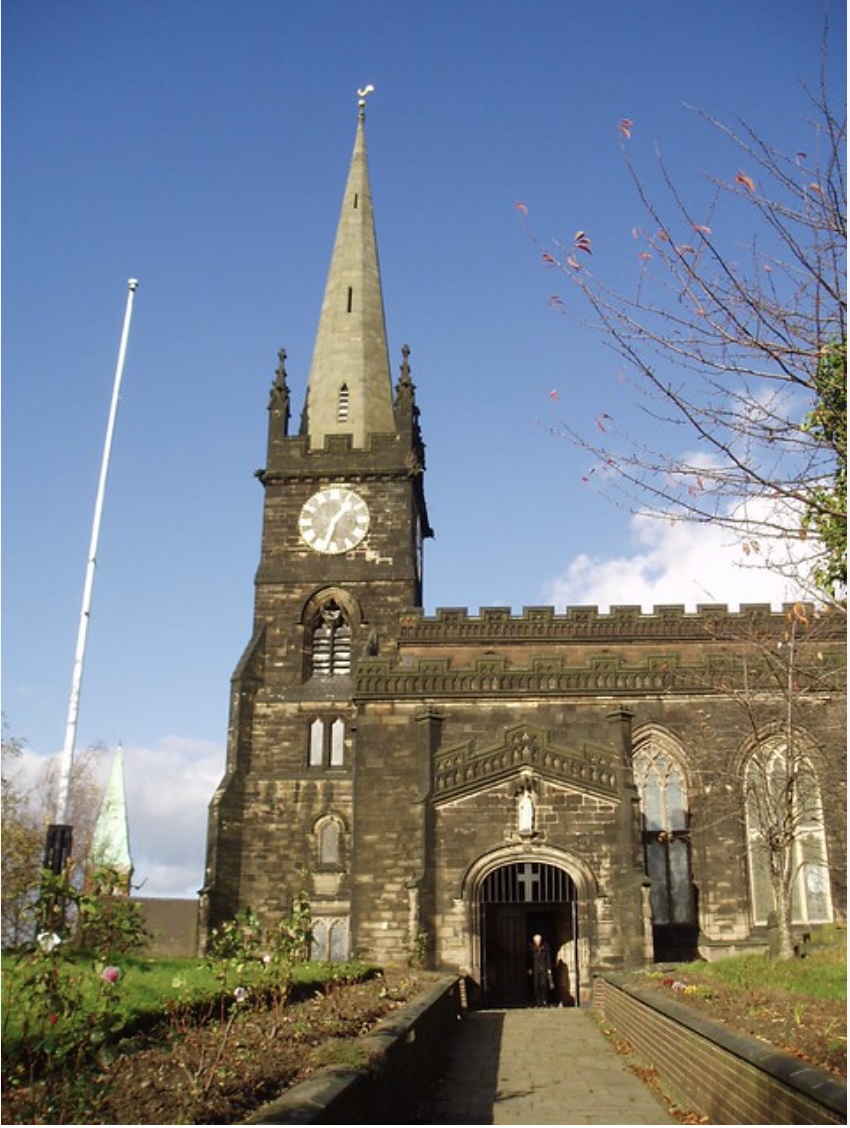
St Bartholomews
Wednesbury to the great network of railways traversing the kingdom. By the mid-19th century, massive iron works employed hundreds of workers, and the parish had recovered and grown prosperous through the establishment of several large foundries and the introduction of new manufactures. It’s against this backdrop of coal dust, forge fires, and industrial ambition that I imagine my Constable ancestors going about their lives.
St Bartholomew’s: The Heart of the Community
At the centre of Wednesbury’s spiritual life stood – and still stands – St Bartholomew’s Church, a magnificent medieval structure sitting atop Church Hill, visible for miles around.
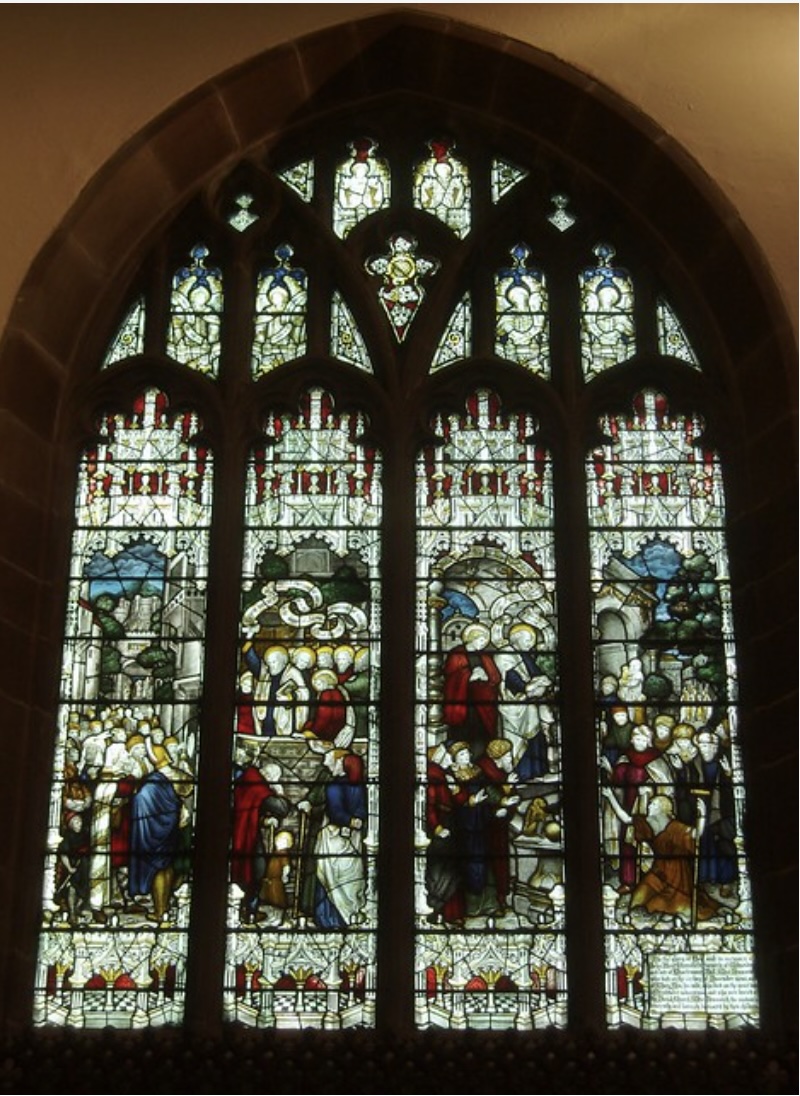
This Grade 2 listed building was first mentioned in historical records in 1088, though the present church dates from the late medieval period. It’s a very large and fine building, enlarged and developed by the Victorians, with a superb collection of Charles Eamer Kempe stained glass windows and plenty of original medieval furnishings. Walking through St Bartholomew’s today, you can see the fighting cock lectern—a unique and quirky feature that speaks to the church’s long history. Above the font, there’s a painting depicting Christ’s descent from the cross, commissioned around 1698 and painted by Jean-Baptiste Jouvenet, a renowned French religious painter. It’s a remarkable treasure to find in a parish church in the English Midlands.
Screenshot
This is where my Constable ancestors worshipped. This is where they were baptised, married, and buried. Samuel Constable was baptised here on 2 August 1685, his name recorded in the parish register. Another Samuel – the son of James and Elizabeth – was baptised here on 13 August 1738, and buried here just two years later on 18 July 1740. John Constable married Elizabeth Turner at West Bromwich in 1772, but the family’s spiritual home remained St Bartholomew’s.
The Family Across the Generations
My earliest known Constable ancestor in Wednesbury is William, born in 1651. He married Anne Haines in 1672 when he was 21 and she was 20—a young couple beginning their life together in this industrial parish. They had at least fourteen children, including Samuel, born in 1685. Samuel married a woman named Phoebe around 1704, and they had eight children together. Their son James had a child named Samuel, baptised in 1738. There was also John Constable, born in 1735, who eventually married Elizabeth Turner in 1772 at the age of 37, described in the marriage record as a widower of Wednesbury. The family name itself shifted between spellings—Constable and Cunstable appear interchangeably in the records, a common variation in an era before standardised spelling. I have wills from Ann Cunstable (dated 30 October 1724) and William Cunstable (27 May 1724), documents that reveal glimpses of their lives: mentions of hanging presses, pigs in the yard, stock of drink to be divided among daughters, small bequests of five shillings to grandchildren.
These wills are intimate documents. They tell me that Ann had daughters named Rose and Rebecca, that she had a son John and another son Samuel. They tell me she was literate enough to make careful provisions for her property, even if she signed with her mark rather than her name.
A Presence Across Time
My 5x great-grandmother Phebe Constable was born in 1731 in Wednesbury. When she married Philip Martin in 1761, that was the last of my direct line with the interesting name of Cunstable or Constable.
What strikes me most about researching the Constables is their persistence. They lived through the 17th and 18th centuries in Wednesbury, raising children, working in a town transformed by industry, worshipping in a medieval church that still stands today. The Constables of Wednesbury were ordinary people. But they were my people, and their story is woven into the story of this remarkable town.
References:
http://www.historywebsite.co.uk/articles/Wednesbury/Churches.htm
History, Gazetteer and Directory of Staffordshire, William White, Sheffield, 1851.
Images of St Bartholomews, Wednesbury from Flickr.
